
My sister rang me last month asking if a “normal sideboard” would fit in the gap between her hallway arch and the wall heater. It measured 74cm. That question is more common than you’d think — most people don’t realise sideboards come in genuinely small footprints until they start measuring their own wall. So I pulled together the questions I get asked most about a small sideboard storage cabinet, using the 70cm brown engineered wood buffet as the reference point, since it’s the one that fits the awkward gaps everyone seems to have.
Is 70cm actually small enough for a tight living room or hallway?
Yes, for most Australian homes it is. A 70cm-wide sideboard slots into spots a full-size buffet (120-160cm) simply can’t — the wall beside a hallway entry, the dead space next to a TV unit, or a narrow dining nook in a townhouse. The Sideboard Storage Cabinet in Brown Engineered Wood, 70cm is built specifically for that in-between spot: bigger than a bedside table, smaller than a full buffet run.
If you’re working with something even tighter, the White Sideboard Storage Cabinet at 66cm shaves off another few centimetres, which matters more than people expect when you’re measuring to a door swing or skirting board.
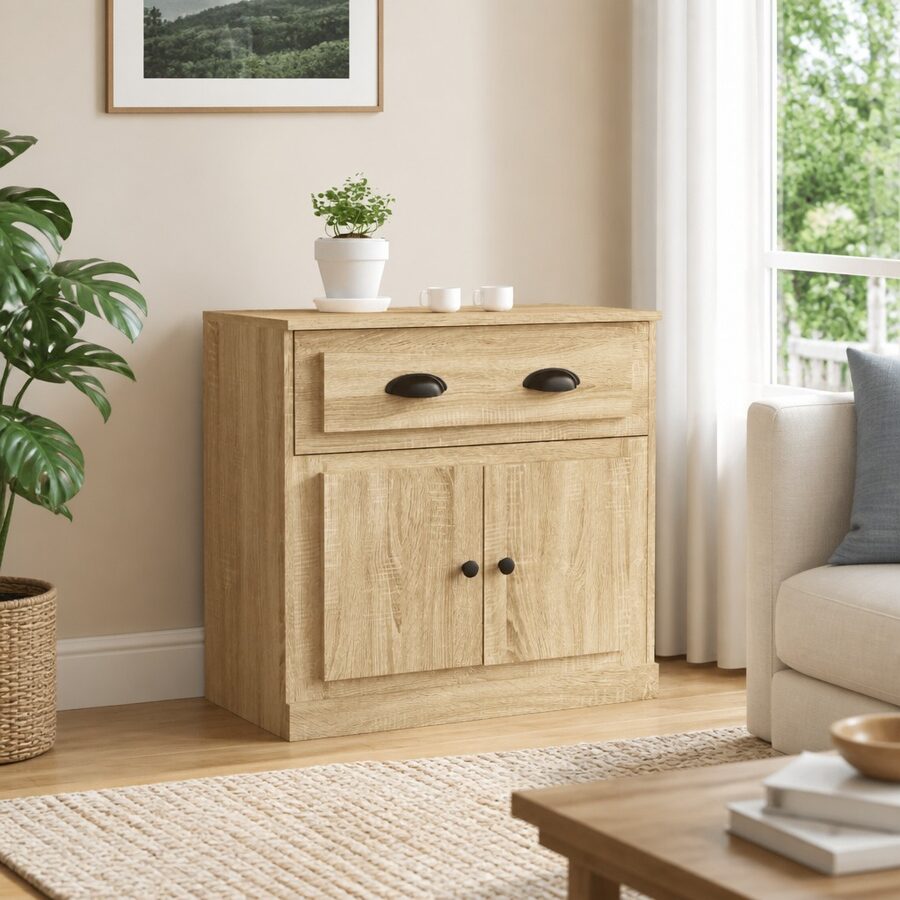
What can you realistically fit inside a cabinet this size?
People assume a compact sideboard means compact storage, but it’s more about smart division than raw volume. In a 70cm-wide unit like this one, expect:
- Dinner sets for four to six, stacked flat inside the cupboard section
- Table linen, placemats and coasters in the drawer or shelf area
- Spare remote controls, coasters, candles — the stuff that clutters a coffee table
- Board games or a small liquor collection if you’re using it as a bar buffet
If you need more dedicated drawer space — say for cutlery trays or folded tea towels — the 4-drawer oak sideboard with 1 compartment gives you that split of drawers versus open cupboard, which suits people who hate digging through a deep cabinet to find one thing at the bottom.
Is engineered wood actually durable, or is it just cheap MDF?
Engineered wood gets an unfair rap. It’s not solid timber, no argument there, but it’s not flimsy either. The panels are layered wood fibres bonded under pressure with a wood-grain or painted finish over the top — more stable than solid timber in Australian conditions, actually, because it doesn’t warp or crack when the humidity swings between a Melbourne winter and a 40-degree February.
For a piece that’s mostly holding crockery and linen rather than taking heavy daily impact, engineered wood is the sensible choice. It’s also why these cabinets are priced the way they are — you’re not paying for oak veneer premiums, but you’re still getting a cabinet that’ll hold its shape for a decade of normal use.
How hard is assembly, honestly?
Flat-pack, but not fiddly. Most 70cm sideboards like this arrive in one or two boxes with pre-drilled panels, cam locks, and a hex key included. Budget 30-45 minutes if you’ve done flat-pack before, closer to an hour if it’s your first go. A few things that actually help:
- Assemble on a towel or old blanket on the floor, not directly on tiles — saves the finish from scratches
- Do the back panel and sides before attaching doors, not after — doors go on last, always
- Check the cabinet is sitting level before you fully tighten the back panel screws, otherwise doors won’t close flush
Two people makes it faster but it’s genuinely a one-person job if you’ve got a bit of patience.

Can it double as a TV console or a bar buffet?
At 70cm wide, it’s a bit narrow to sit a large TV on top comfortably — you’d want at least 100-120cm width for anything over a 50-inch screen so the base doesn’t look silly underneath. But it works well as a side console: lamp, a stack of books, a tray of glasses and a bottle or two. That’s actually where the “buffet cupboard” naming comes from historically — a cabinet you’d set drinks and serving dishes on beside a dining table, not necessarily media furniture.
If your living room is open-plan and you want the sideboard to visually anchor a reading corner or entry table, brown engineered wood with a warm timber-look finish reads calmer than a stark white or black cabinet, especially against light walls or timber-look flooring common in newer Australian builds.
Brown, oak, or white — which finish actually suits my room?
This comes down to your existing furniture more than any trend. A few practical rules of thumb:
- Brown finish — pairs well with warmer timber floors, rattan or linen furniture, and rooms that already lean toward a cosy, lived-in look. The 70cm brown buffet sits comfortably as a standalone piece without needing to match every other timber tone exactly.
- Oak finish with drawers — the 4-drawer oak sideboard reads slightly lighter and more Scandinavian, good for rooms with grey or blonde timber floors.
- White finish — the 66cm white sideboard brightens a small or dark room and makes the space feel bigger, which matters in units with limited natural light.

Where do these cabinets actually get used in real homes?
From what customers tell us, the most common spots are: beside the front door for keys, shoes and mail; against the dining wall as an actual buffet during dinners; in a home office as a printer-and-files cupboard that doesn’t look like office furniture; or in a nursery as a low, closed-storage unit that keeps toys out of sight. A 70cm cabinet is versatile enough to move between all four roles over the years, which is honestly the best argument for buying compact rather than committing to a huge built-in.
If you’re still unsure on measurements, grab a tape measure before you order rather than after — check door swing clearance and skirting board depth, not just the flat wall width. A cabinet that’s 70cm wide but sits 40cm deep needs more clearance than the number on the box suggests once you factor in door handles and drawer pulls.