Our neighbour’s Kelpie-cross, Bailey, used to sleep with his back legs hanging off a bed clearly bought for a dog half his size. Every morning there’d be a cold nose and two paws on the tiles, the rest of him curled up like he was trying to fit into a shoebox. His owner kept saying “he seems fine” — but a dog who can’t fully stretch out isn’t fine, he’s just used to it.
If you’ve got a Labrador, a Staffy, a Ridgeback or anything north of 25kg, you’ve probably hit this exact wall. Standard pet beds max out around 90-100cm, which is fine for a Cavoodle but a joke for a dog that’s 70cm nose to tail. The fix isn’t complicated — it’s just sizing up properly and picking a bed built to survive real dog life, not showroom photos.
Why “large” on the label doesn’t always mean large enough
A lot of “large” dog beds sold in Australia top out at around 100-110cm long. That’s fine for a Beagle. It is not fine for a Golden Retriever who likes to sleep fully stretched out, which is most of them. Dogs regulate their body temperature partly by extending their legs and spreading flat — if the bed forces them to curl up all the time, they’re not getting proper rest, and older dogs with hip or joint issues especially need the room to lie flat without their limbs cramped against a raised rim or falling onto cold floorboards.
This is where a genuinely oversized option like the 1.8m Fluffy Grey Nap Bed earns its keep. At 1.8 metres, it’s built for large and giant breeds — Ridgebacks, Rottweilers, Great Danes, or two smaller dogs who like to share (and let’s be honest, most dogs do). The fluffy grey finish also hides dirt and fur better than white or cream beds, which matters more than people expect until they’re vacuuming a beige bed twice a week.

The smell problem nobody warns you about
Dog beds absorb everything — drool, wet fur after rain, the odd accident, plus whatever they roll in at the park. Foam-filled beds with sewn-in covers are the worst offenders here, because you can spot-clean the surface but the padding underneath just keeps holding onto smell and bacteria. After a few months it doesn’t matter how much you scrub the top, the whole thing has a faint damp-dog smell that never fully lifts.
The only real fix is a bed you can properly wash, not just wipe down. Machine washable covers solve this outright — you strip it off, chuck it in on a warm cycle, and it comes out actually clean rather than just damp and fresher-smelling. If your dog has allergies or you’re dealing with dust mites (common in humid Aussie climates, especially near the coast), something like the Dog Calming Bed with anti-dust mite washable cover is worth a look — it’s built specifically around that problem, with a removable cover and a bolstered edge that anxious or older dogs tend to burrow into.
Shedding season and the “why is there fur everywhere” spiral
Double-coated breeds — Huskies, Shepherds, Retrievers — blow their coat twice a year and it goes everywhere, bed included. A plush or fluffy surface can actually work in your favour here because loose fur tends to sit on top rather than weave itself into the fabric the way it does with looped or textured covers. A quick shake outside and a run of the vacuum handles most of it between full washes.
Still, no cover survives shedding season and years of use without a proper wash eventually. That’s non-negotiable if you want the bed to last. Anything that says “spot clean only” on the tag is going to look tired within a year with a heavy shedder using it daily.
Multiple dogs, one bed: does it actually work?
People ask this a lot — can two dogs comfortably share one large bed, or is that wishful thinking? It depends on the dogs, obviously, but a 1.8m bed genuinely has the floor space for two medium dogs or one giant breed plus a smaller dog who insists on sleeping touching their sibling (again, most dogs). The key is picking a bed with a flat, open design rather than a small bolstered nest, which brings us to the next point.

Flat and open vs raised-rim designs — which suits your dog?
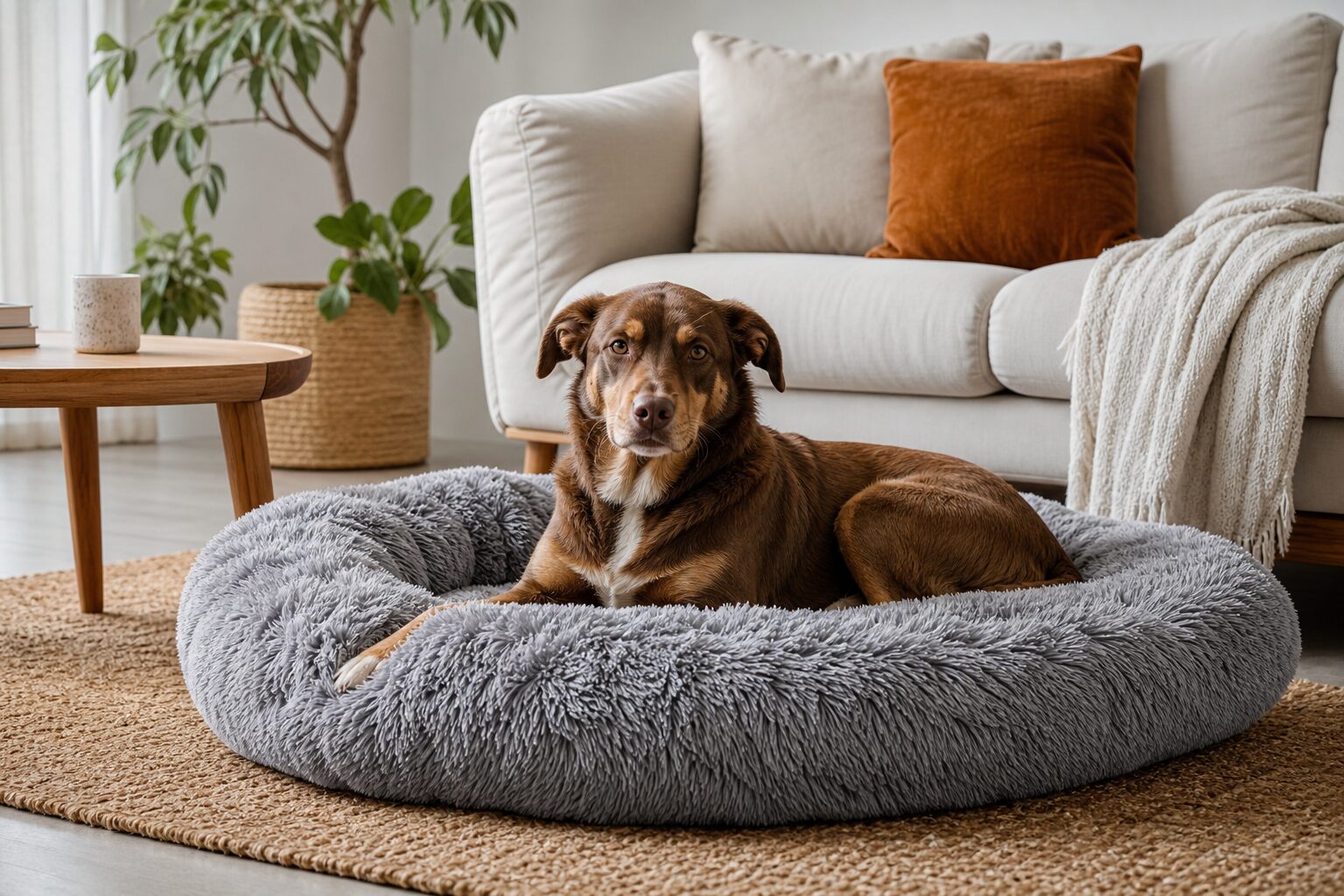
Not every dog wants the same thing. Some genuinely prefer to sprawl flat with nothing around them. Others — usually the anxious ones, or breeds bred to den, like smaller terriers — want to feel enclosed and will actively push themselves into a corner or curl against a raised edge. If your dog is the second type, a donut-style bed with a raised rim gives them something to lean into and rest their head on, which a lot of owners notice actually settles restless dogs faster than a flat mat does. The XXX-Large Donut-Shaped Pet Mattress is built for exactly this — plush raised rim, big enough for large breeds, and still soft enough for older dogs with sore joints to sink into rather than lie on top of.
If your dog sprawls flat and starfishes across the whole floor, though, the open 1.8m nap bed shape suits them better — no rim to climb over, just one big flat surface they can stretch fully across.

What to actually check before you buy
- Measure your dog first. Nose to tail, fully stretched. Add at least 15-20cm so they’re not curled to fit.
- Confirm the cover is genuinely machine washable, not just “wipeable” — check the care label, not just the product description.
- Check the fill. Look for filling that bounces back after washing rather than clumping into flat lumps after one cycle.
- Think about floor type. Tiled or floorboard homes benefit from a bed with some cushioning depth, since there’s no carpet underneath to soften things.
- Consider your dog’s sleeping style — sprawler or curler — before choosing flat vs raised-rim.
Bailey eventually got upgraded to a proper large bed, and according to his owner he now sleeps like he’s been drugged — flat out, all four legs extended, not moving for hours. Sometimes the fix really is that simple: stop making a big dog fold himself into a small bed and just give him the room he actually needs.